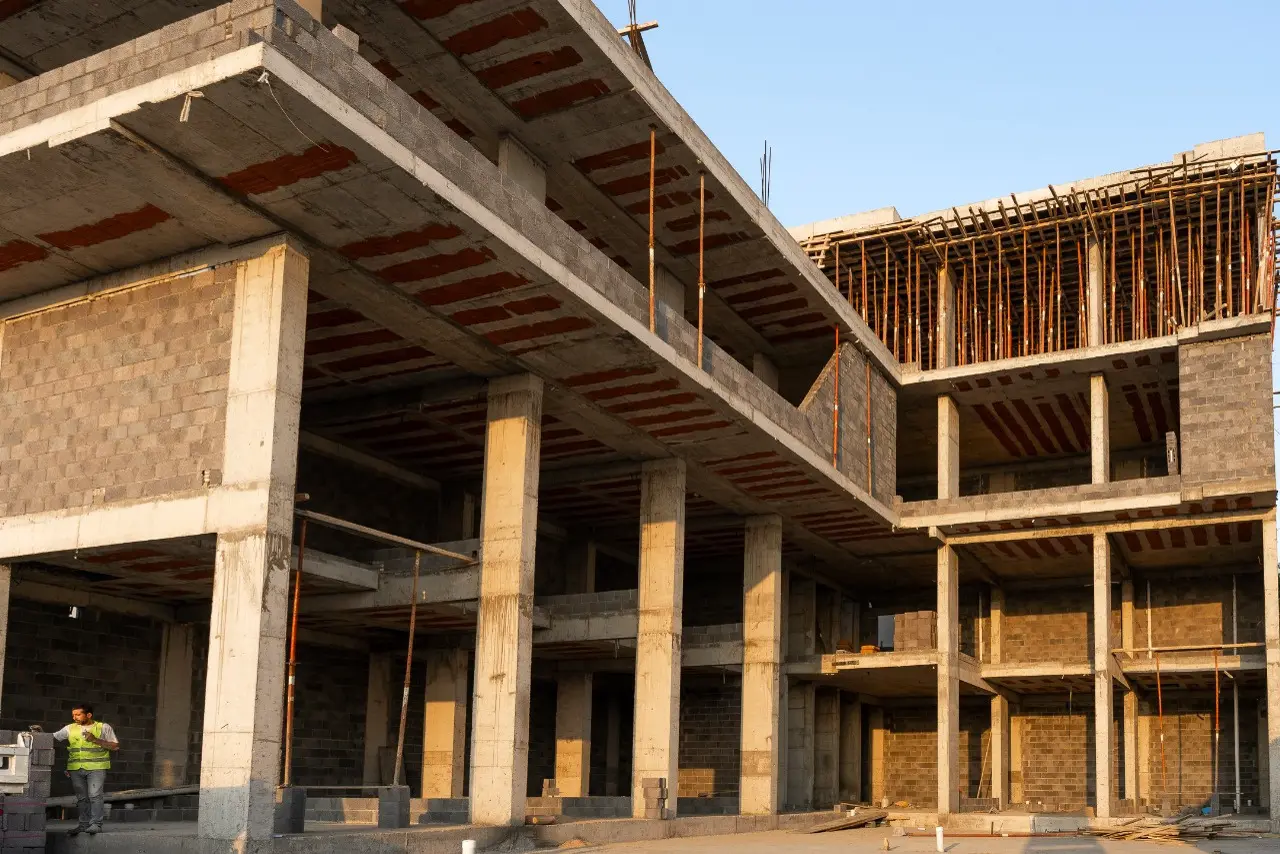
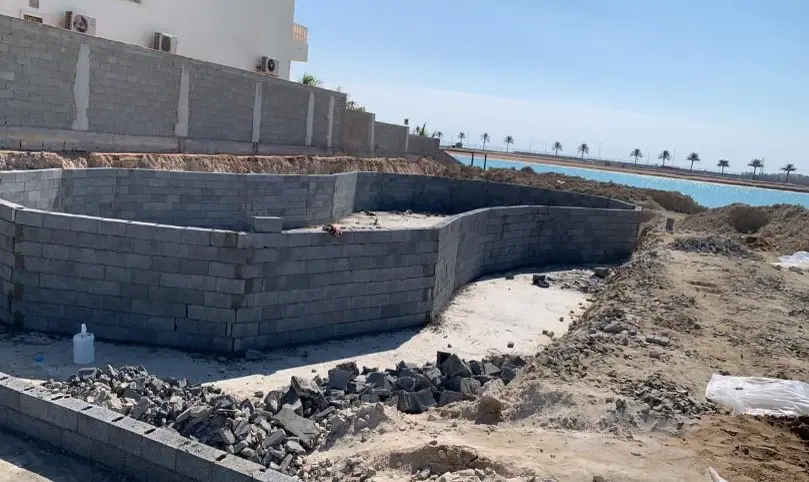
In short
Turnkey construction is a delivery model in which one contractor takes a project from design or an early brief through to a completed, functioning building handed over ready for use, holding responsibility for design coordination, structural works, electromechanical systems, finishing and commissioning. Its value is a single point of accountability across every trade. Its risk is scope definition: what counts as ready for use has to be written down, because loose furniture, landscaping, external works and operational permits sit differently in different contracts.
The word is doing a lot of work. Turnkey promises that the client's involvement ends at the brief and resumes at the key. In practice the promise holds exactly as far as the scope document defines it, and the disputes never happen in the middle of the scope. They happen at its edges.
What turnkey actually means
- Turnkey construction
- A delivery model in which one contractor carries a project through to a completed, functioning building handed over ready for use, holding responsibility for coordination across every discipline involved.
Under a split-trade arrangement the client, or someone paid by the client, has to sequence the structural contractor, the MEP subcontractor, the joiner and the finishing team, and to arbitrate when they collide. Turnkey moves that sequencing problem inside one organisation. That is the entire value proposition, and it is a real one: the coordination work does not disappear under fragmentation, it simply becomes the client's unpaid second job.
The scope table to settle before signing
The following items are the ones that, in practice, are argued about. None of them is exotic. All of them are cheap to resolve in a scope document and expensive to resolve on site.
| Item | Commonly included | Commonly excluded | Settle in writing |
|---|---|---|---|
| Structural works | Yes | — | Rarely disputed |
| MEP installation | Yes | — | Confirm commissioning is included, not just installation |
| Interior finishing | Yes | — | Specify finish grades, not just 'high quality' |
| Fitted joinery | Usually | — | Define which rooms |
| Loose furniture | — | Usually | Almost always needs stating |
| Appliances and white goods | Varies | Varies | List them by item |
| Landscaping and external works | Varies | Often | Define the boundary line |
| Boundary walls and gates | Varies | Varies | State explicitly |
| Signage | — | Usually | Especially for commercial and F&B |
| Operating permits | — | Usually | Occupancy differs from operating |
Where turnkey fits best
- Private villas, where the client is a single decision-maker who wants a finished house, not a procurement process.
- Restaurant, café and clinic fit-out, where interior works, MEP, joinery and lighting run concurrently in a small footprint on a short programme.
- Hospitality refurbishment, where multiple similar units are upgraded to one standard and consistency across them is the product.
- Commercial shells being taken to operational condition, where the tenant's opening date is the binding constraint.
Where it fits less well
- Projects with a mandated competitive tender against a completed design, where the procurement rules assume a split.
- Highly specialised work where the client already holds a specialist designer whose independence is the point.
- Projects where the brief genuinely cannot be fixed at the outset, since the contractor will price that uncertainty and the client will pay for it either way.
Questions to ask a turnkey contractor
- 01
Which disciplines do you execute in-house?
Turnkey delivered by a contractor who subcontracts every trade is still turnkey, but the coordination benefit is thinner. Ask which of structural, architectural, MEP and finishing are carried directly.
- 02
What is your handover definition?
Ask for it as a document, not a sentence. It should list commissioning records, testing evidence and as-built information, not just a date.
- 03
What sits outside the scope?
A contractor who can answer this quickly and specifically has run turnkey projects before. A vague answer is the single most reliable warning sign in the whole conversation.
- 04
What are you classified for?
Verify the contractor classification covers structural, architectural and MEP works, and ask for the ISO and Contractors Authority documentation rather than accepting the claim.
Building Reference United Company Engineering Team
A multidisciplinary team of civil engineers, architects, project managers and construction specialists with extensive experience delivering residential, commercial and industrial construction projects throughout Saudi Arabia.